
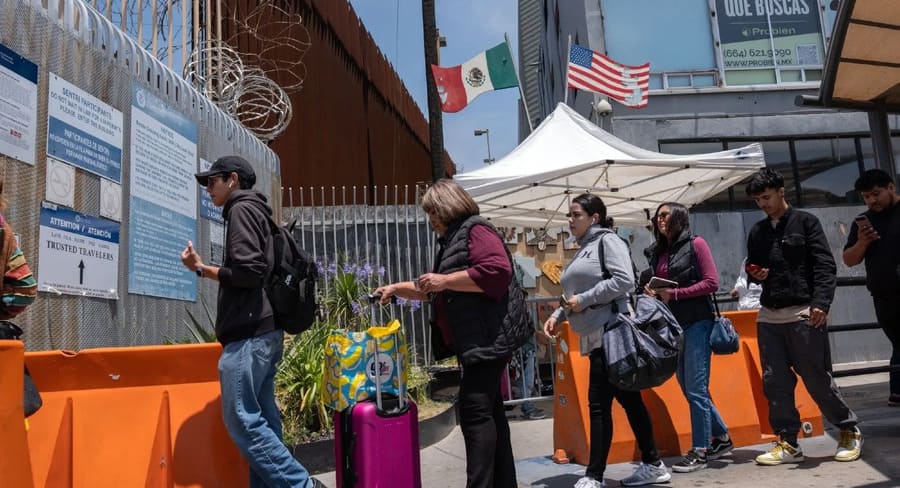
USCIS Now Screening Social Media for Antisemitic Activity
Effective April 9, 2026, U.S. Citizenship and Immigration Services (USCIS) announced it will review the social media accounts of all noncitizens applying for immigration benefits. Posts deemed antisemitic — including reposts or liked content — may be used to deny applications for visas, green cards, and other immigration statuses.
What Triggered This Policy Change?
The Department of Homeland Security (DHS) published guidance on April 9, 2026, directing USCIS adjudicators to consider social media activity as part of any discretionary analysis when processing immigration benefit requests. The policy was issued pursuant to a broader executive order aimed at combating antisemitism and follows similar social media vetting programs already used in visa screening overseas.
According to the official USCIS guidance, content that “endorses, espouses, promotes, or supports antisemitic terrorism, antisemitic terrorist organizations, or other antisemitic activity” will be treated as a negative discretionary factor in any immigration case.
Who Is Affected and What Counts as a Problem?
The policy immediately applies to: applicants for lawful permanent residence (green card), foreign students (F-1 visa holders), noncitizens affiliated with educational institutions linked to antisemitic activity, and applicants for any other immigration benefit subject to discretionary review.
One of the most concerning aspects highlighted by immigration attorneys is that the policy does not require the applicant to have authored the content. According to USCIS guidance, even the act of reposting content — or having such content appear in an applicant’s social media feed — could be considered problematic. There is also no stated time limit on how far back USCIS can review social media history.
Civil liberties organizations including the Brennan Center for Justice have raised First Amendment concerns, arguing that the policy’s vague definitions leave wide room for discriminatory or politically motivated enforcement.
Know Your Rights as an Immigrant in the U.S.
Gender Marker Rules: USCIS Now Only Recognizes Male and Female
As of April 2025 and continuing into 2026, USCIS immigration forms and documents only allow applicants to select “Male” or “Female” as a sex designation. The “X” gender marker and any other non-binary option have been officially removed from all USCIS forms, including Form I-485 (Adjustment of Status).
How Is Sex Now Determined on Immigration Documents?
Under the updated policy, USCIS defines a person’s sex based on what is recorded on the birth certificate issued at or nearest to the time of birth. If a birth certificate shows something other than “Male” or “Female,” USCIS may request secondary evidence — such as other government-issued IDs or medical records — and will ultimately assign either a “Male” or “Female” designation.
This change is especially challenging for transgender, non-binary, and intersex individuals whose passports, state IDs, or other documents may carry different markers. The resulting document mismatches can complicate case processing and may trigger additional scrutiny during adjudication.
LGBTQ+ Immigration Resources in the U.S.
April 2026 Visa Bulletin: Good News for Certain Family Categories
The Department of State’s Visa Bulletin for April 2026 includes positive movement for family-based immigration. The F2A category — which covers spouses and children of lawful permanent residents — is now current for filing, meaning eligible petitioners can move forward with their adjustment of status application.
The Visa Bulletin is a monthly publication that determines whether an immigrant visa number is available for a given category and country. When a category is listed as “current” or “C,” applicants in that category may file immediately — a significant development for the thousands of families waiting in this queue.
However, immigrant visa issuance rates for applicants from high-demand countries (including India, China, Mexico, and the Philippines) have continued to lag. Final action dates for employment-based categories from these countries remain years or even decades backlogged.
How to Read the Visa Bulletin — A Step-by-Step Guide
Frequently Asked Questions (FAQ)
What social media platforms does USCIS review?
USCIS guidance does not restrict review to a specific platform. Any publicly accessible social media account — including X (Twitter), Facebook, Instagram, TikTok, and others — may be subject to review. Applicants should assume that all public and semi-public content is potentially visible to adjudicators.
How can I protect my immigration case if I use social media?
Immigration attorneys advise reviewing your social media history carefully, including reposts, likes, and comments. Consider consulting with a licensed immigration attorney before filing any application. Deleting content is not necessarily a solution and could raise other concerns if content is discovered through other means.
When does the new social media review policy go into effect?
The policy went into effect immediately upon USCIS’s April 9, 2026 announcement. All pending and new immigration benefit requests are subject to this review going forward. There is no grace period.
Who can use the F2A visa category that is now current for filing?
The F2A category is for spouses and unmarried children (under 21) of lawful permanent residents (green card holders). With F2A now on the April 2026 Visa Bulletin, eligible applicants may file for adjustment of status or an immigrant visa if a visa number is available under their specific circumstances.
What are the consequences of the gender marker policy for LGBTQ+ applicants?
LGBTQ+ applicants — particularly transgender, non-binary, and intersex individuals — may face document inconsistencies between their passport, state ID, and USCIS records. These mismatches can cause processing delays or additional requests for evidence (RFEs). An immigration attorney experienced in LGBTQ+ cases can help navigate these challenges.
Consult with an immigration attorney to understand how these changes affect your specific case.
This article is for informational purposes only and does not constitute legal advice.
Sources: USCIS (uscis.gov), AILA, American Immigration Council, U.S. Department of State Visa Bulletin April 2026, Brennan Center for Justice